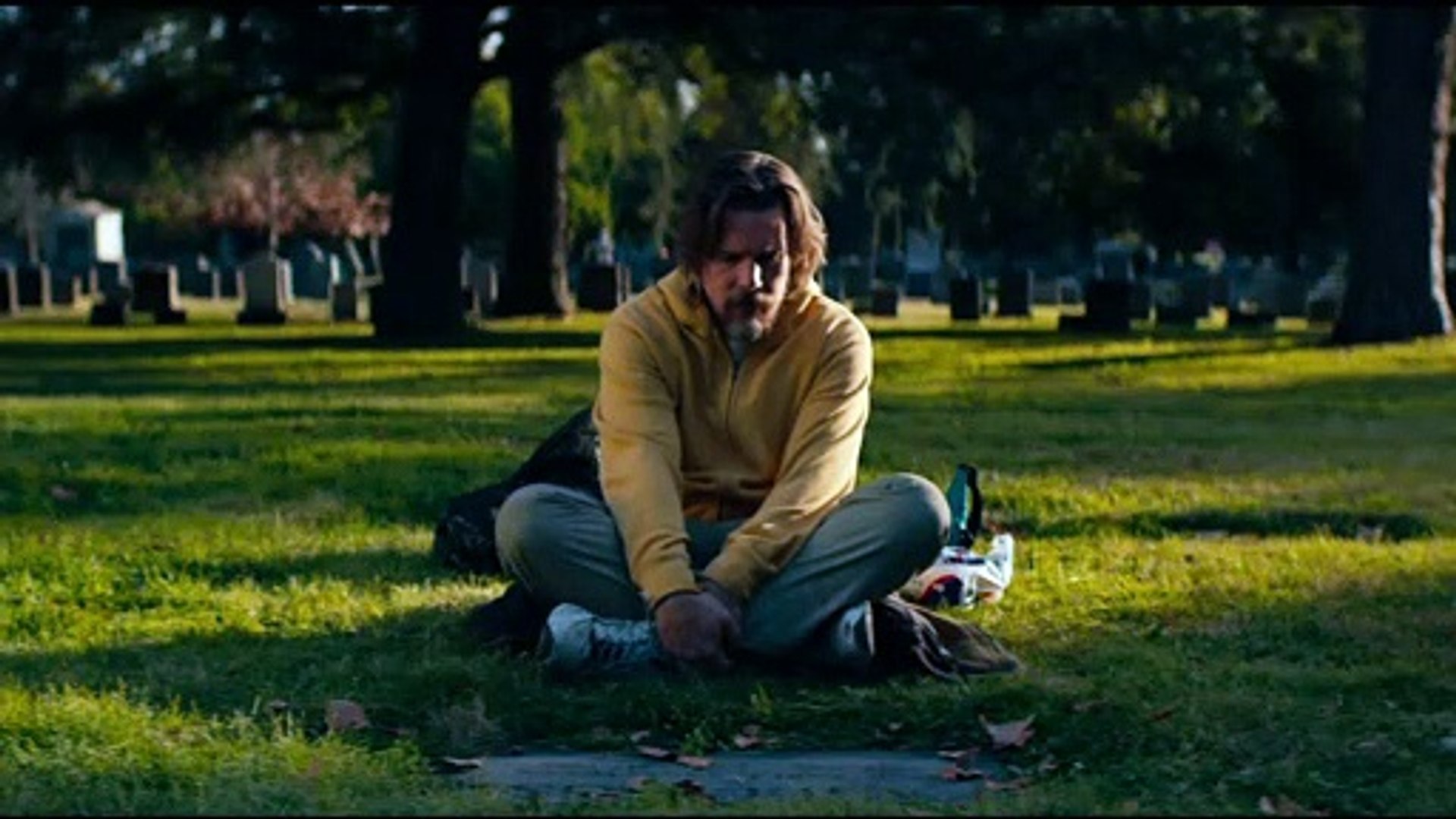
This is sort of a tough one because this movie’s strong points almost allow it to make a clean getaway, but the story is frankly too nonsensical for the otherwise breathtakingly vulnerable filmmaking to obscure its weaknesses. It is certainly the most empathetic characterization of an ex-convict that I’ve seen in a film, and Ethan Hawke assumes the role of Russ so well that the first act, depicting Russ timidly navigating the logistical banalities associated with re-entering society after twenty years, stands out as by far the most compelling portion of the film.
Adopt a Highway is an almost ethnographic investigation into the life of someone mercilessly spit out by the system into a world shockingly different than the one ripped away from him as a teenager, and the audience observes the rotten fruits of sweeping crime policy reforms and rapid technological change being borne in real time through the perspective of someone who can only rely on the patience and benevolence of complete strangers to get along. It is this notion of a collective, informal safety net scraped together for a man thoroughly alienated from society that contains the most emotional weight in the narrative, and the transition of this dynamic from strangers onto Russ to Russ onto Ella is weak simply because his decision-making becomes increasingly irrational in order to justify the story.
There’s no plausible reason someone previously demonstrated to be as conscientious as Russ would not immediately take the child to a hospital. It is understandable that he would be distrustful of the state due to his parole status but as soon as he decides to actively avoid seeking adequate care for Ella, it becomes impossible to ignore all the ways in which he’s exposing her to significant risk of harm. There’s obviously no way that a baby could be sufficiently cared for by someone in Russ’s position in the same way that he obviously shouldn’t be expected to fully care for himself, and so it feels more cruel than heartwarming to watch him bond emotionally to her.
After this tension is finally exhausted, the story puzzlingly moves onto what appears to be an homage to Hawke’s iconic role in the Before Sunrise trilogy, in which he spontaneously develops a friendly relationship with a fellow bus passenger on his journey back to his hometown. This offers little in the way of plot development or characterization and alters the trajectory of the narrative, veering into a rather saccharine and unsatisfying conclusion. The myriad of legal questions raised by Russ’s embellishment of the truth are left unanswered and a false sense of hope for the usual story of someone in his position lingers. Although it’s refreshing to see an impoverished character experience a fate other than perpetual suffering, the resulting commentary on parenting and growth rings a little bit hollow.
I knew absolutely nothing about this movie before deciding to watch it so I was very happy to go into it as blind as I did. I’m not disappointed, because I think it presents some really fantastic ideas about representing poverty and inequality in 21st century America, and the plot is a accompanied by a mostly-great-if-a-bit-gratuitous guitar score from Jason Isbell. With that being said, I wish the script could’ve been revisited a few more times by a few more people.
Watched 12/29/2025
Leave a Reply